
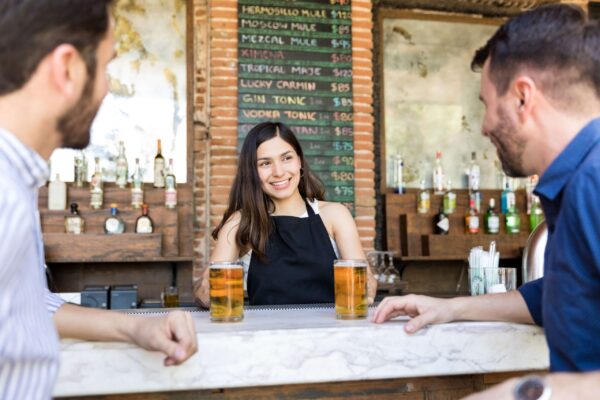
Ordering alcoholic beverages in Spain can turn into a real quest for a foreigner. Many travelers make a classic mistake by simply asking for “una cerveza.” Although the word is understood by every bartender, it is too general for the Spanish culture of consumption. In response, you will most likely receive a questioning look or a follow-up question about the desired glass size. In Spain, it is not customary to just drink beer; there is an entire system of names that depends on the volume, the shape of the glassware, and even the specific province where you are located. Understanding these nuances allows you not only to get the desired drink but also to feel like part of the local community that values tradition and proper serving.
Small Volumes and Regional Names
Caña
One of the key features of the Spanish lifestyle is the preference for small volumes. This is explained by climatic conditions. Under the hot Mediterranean sun, a large glass of drink quickly heats up, losing its taste qualities. Therefore, locals prefer to order several small portions in a row so that each of them remains ice-cold. The most common option in the country is Caña. Caña is a small draught glass with a volume of 200 to 300 ml. Usually, bars serve local lager varieties, such as Estrella in Barcelona or Mahou in Madrid. By ordering a Caña, you get an optimal portion that perfectly complements tapas.
ZURITO
If you head to the north of Spain, the name will differ. In the Basque Country, the name ZURITO is used for the smallest portion. This term appeared in the 60s of the last century thanks to the “txikiteo” tradition – the custom of going from bar to bar with a group of friends. A ZURITO is usually 100–140 ml of beer, which allows you to enjoy the taste and a small Pincho snack while saving strength for the next establishment. In other regions, such as Galicia or Castile and León, an analogous miniature volume is called “corto,” and in Aragón, you might hear the word “penalti.” Such a variety of names emphasizes the deep regional identity of Spaniards.
From Standard Glasses to Large Volumes
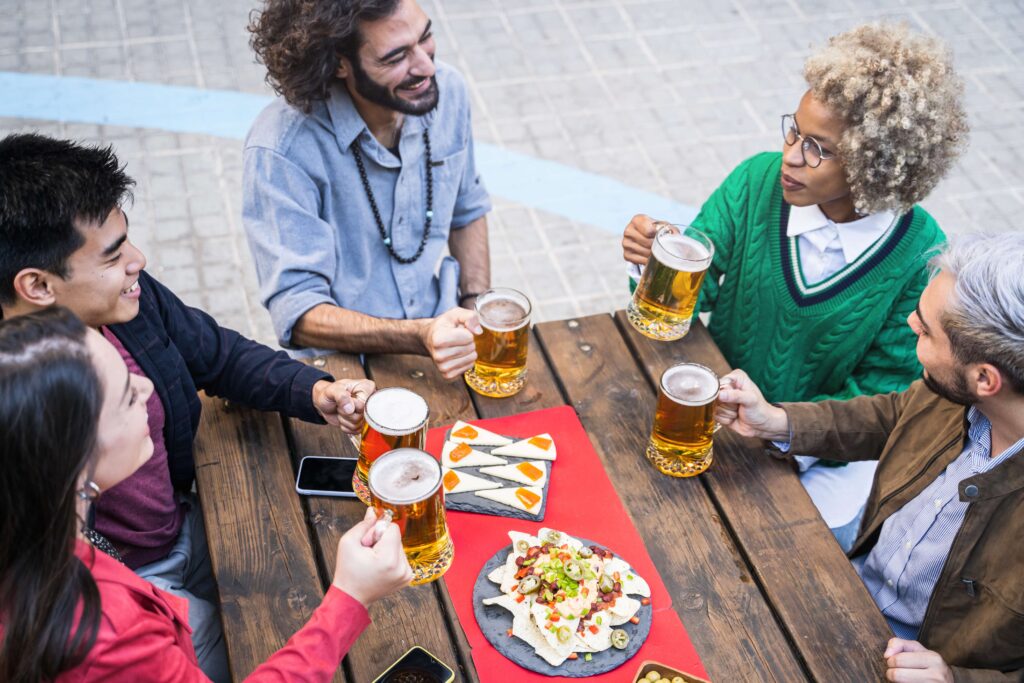
When it comes to volumes more familiar to foreigners, the naming system becomes even more complex. If Una Caña seems too small, you can look at medium formats. In Madrid, an order under the name “doble” is popular. In other cities, a volume of about 330 ml may be called “tubo” due to the tall cylindrical shape of the glass, which resembles a tube. If you prefer bottled beer, it is important to know the word “tercio.” This is a standard 0.33 L bottle, which has this name almost everywhere except Catalonia, where it is called “mediana,” or Asturias, where they say “media.” Small bottles with a volume of 200 ml can also have names: “quinto,” “botellin,” or even “botijo.”
For those accustomed to large portions equivalent to a British pint, the word “Jarra” exists. This is a large mug, often with a handle, with a volume of about 500 ml. It is worth noting that Spaniards themselves rarely order such a volume. Often, a Jarra is chosen by tourists or students due to the favorable price. In some regions, for example in Andalusia, such a mug may be called “maceta,” and in other places – “tanque” or “pinta.” The largest volumes, liter containers, are used mainly during mass festivities or youth parties. In Catalonia, a liter of beer can be called Xibeca, in the Basque Country – Katxi, and in Madrid – “mini,” which sounds ironic given the gigantic size.
Special Combinations and Traditional Serving Methods
Mixed drinks occupy a special place in Spanish beer culture, helping to quench thirst even better in the heat. The most popular option is Clara – a mixture of beer with lemonade or a mild sweet soda called gaseosa. Usually, the proportion is about 60% beer to 40% lemonade. This drink has many regional names: in Mallorca it is “shandy,” in Tarragona – “champú,” and in the Basque Country – “lejía” or “pika.” Clara is ideal for those looking for a lighter and sweeter version of traditional alcohol.
A Porrón is a traditional glass flask with a long spout that was previously used by winemakers. Drinking from it is a real art, as the drink must be poured in a thin stream directly into the mouth without touching the lips. This allows a group of friends to drink from one vessel while maintaining hygiene. Although the Porrón is more often associated with wine, beer or a Clara mixture is often served in it during communal lunches.
Here is a short list of names to help you navigate the bar:
- Una Caña or Doble – ideal options for a quick snack with tapas in the city center.
- Tercio or Mediana – the standard choice for those who prefer bottled beer.
- Clara – the best choice for a hot day when you want something light and citrusy.
When ordering beer in Spain, it is worth paying attention to the branding of the establishment. If the sign says Estrella Galicia or Mahou, it is not just an advertisement, but an indication of which specific draught beer is served in this bar. The choice is usually limited to one or two varieties. For those who wish to learn more about the beer culture, there are specialized craft tours where you can taste many varieties under the guidance of guides.
Knowledge of how to order beer in Spain will allow you to feel the true atmosphere of Spanish culture, where ordering the correct portion is the first step to a pleasant evening. Each name reflects local culture and history. Spain is a country of nuances, where even the way of pouring foam can differ in neighboring cities. By learning these rules, you are not just buying a drink, but expressing respect for local customs. So next time, instead of a general request, try asking for “una caña, por favor” and see how the bartender’s attitude towards you changes as an informed guest.
Comments are closed